

Bentley Battery Management Systems are not just about starting the car. They manage voltage, temperature, and battery health across every mile. In Dubai’s heat, they work overtime, and when they fail, it’s rarely obvious until the damage is done. These systems are complex. They require battery diagnostics, not guesswork. That’s why owners turn to Bentley service teams. The tools, the experience, and the cross-platform knowledge make all the difference.
Luxury car battery systems, such as Bentley’s, demand more than a quick scan. They need battery monitoring that understands the logic behind the control unit. And if you’re seeing slow starts or voltage drops, it’s not just wear, it’s the system asking for help. Bentley Battery Management Systems regulate thermal balance to prevent heat-induced degradation, critical in UAE conditions.
Core Functions of Bentley Battery Management Systems
Bentley Battery Management Systems do more than just keep the battery alive; they orchestrate how power moves, how heat is handled, and how each cell behaves under stress. It’s a full-time job, especially in climates like Dubai, where heat isn’t just a nuisance, it’s a threat.
At the heart of Bentley Battery Management Systems is real-time voltage regulation. The system constantly monitors current flow, adjusting output to match driving conditions. Whether you’re idling in traffic or navigating desert highways, the voltage map adjusts to protect the battery. Then there’s cell balancing. Passive balancing bleeds excess charge from stronger cells, while active balancing redistributes energy more efficiently. Luxury EV Battery Management Systems uses both methods depending on the battery’s age, chemistry, and load profile.
Thermal control is another critical layer. Sensors track internal temperatures, triggering cooling protocols when thresholds are breached. In Dubai, this function is not optional; it’s essential. Finally, Luxury EV Battery Management Systems guard against electrical extremes. Overvoltage, undervoltage, and short-circuit events are intercepted before they reach critical levels. That’s not just protection, it’s preservation.
Bentley Battery Management Systems are not passive components . They’re active, adaptive, and constantly working behind the scenes to keep your vehicle’s power ecosystem stable.

Architecture of Bentley Battery Management Systems
Bentley Battery Management Systems are built like a layered control network, not a single box tucked under the hood. The architecture varies depending on the model, but it typically falls into one of three categories: centralized, modular, or distributed.
In a centralized BMS, all control functions are packed into one unit. It’s simple, but not always ideal for luxury vehicles with complex energy demands. Bentley Battery Management Systems often lean toward modular setups, where each module handles a specific task, voltage monitoring, temperature sensing, or cell balancing. This allows for better fault isolation and easier upgrades. Then there’s the distributed architecture, where control is spread across multiple nodes. It’s more flexible and scalable, especially in hybrid or EV configurations.
Communication is key. Bentley Battery Management Systems rely on CAN bus protocols to relay data between modules, and in newer models, Ethernet is used for faster, high-volume data exchange. These protocols ensure seamless integration with the vehicle’s onboard diagnostics and battery control unit. Bentley Battery Management Systems are not static; they evolve with each model, adapting to new battery chemistries and energy demands. And in Dubai’s climate, that adaptability is more than a feature; it’s a necessity.
Common Issues in Bentley Battery Management Systems
Bentley Battery Management Systems are precise, but they’re not invincible. When they start misbehaving, it’s rarely dramatic, until it is. In Dubai’s heat, even a small glitch can snowball into a full-blown failure. And once the system loses control, battery degradation speeds up fast. Here’s what tends to go wrong:
- Voltage irregularities: Sudden drops or spikes that trigger system alerts
- Thermal runaway: Internal heat builds faster than the system can cool it
- Cell imbalance: One or more cells charge or discharge unevenly, stressing the pack
- Fault codes BMS throws codes like P0AFA or P1A6F, often linked to voltage deviation or sensor failure
- Parasitic drain: Modules continue drawing current after shutdown, leading to battery depletion
- Sensor misreads: Temperature or voltage sensors feed incorrect data, causing false alerts
- Communication faults: CAN bus errors disrupt data flow between control units.
- Delayed startup: The System hesitates to initialize, especially after long idle periods
- Ambient heat overload: Dubai’s climate pushes thermal limits, reducing battery lifespan
- Error diagnostics lag: Faults don’t always trigger immediate alerts, delaying intervention
Bentley Battery Management Systems are designed to protect the battery, but when they fail, they often do so quietly. Early inspection isn’t just smart, it’s necessary.

Diagnostic Procedures for Bentley Battery Management Systems
Bentley Battery Management Systems are complex. Diagnosing them isn’t just about plugging in a tool; it’s about understanding how each module communicates, how each cell behaves, and how heat affects the system in real-world conditions. Especially in Dubai, where ambient temperatures push battery systems to their limits, proper diagnostics are the difference between a quick fix and a costly failure.
Battery Scan Tools
The first step is connecting to the battery control unit using high-grade scan tools. These tools pull real-time data, voltage, current flow, temperature readings, and reveal how the Battery Management Systems are reacting under load. Without this baseline, everything else is guesswork.
Voltage Mapping
Voltage mapping breaks down how each cell performs. Technicians look for inconsistencies, cells that charge more slowly, discharge faster, or show signs of imbalance. Battery Management Systems rely on this data to trigger balancing protocols. If the map’s off, the system can’t respond correctly.
Thermal Imaging
Standard sensors can miss localized heat spikes. That’s where thermal imaging comes in. It shows exactly where heat is building, whether it’s a connector, a module, or a cell group. In Dubai, this step is critical. Battery Management Systems use thermal data to prevent runaway conditions, but they can’t act on what they don’t detect.
Diagnostic Software
This is where fault codes come into play. Bentley Battery Management Systems logs every anomaly, voltage dips, communication errors, and sensor faults. Diagnostic software reads these logs, interprets them, and helps technicians decide whether recalibration or replacement is needed. For deeper context on firmware, control logic, and stability improvements, see Why Bentley Software Updates Matter.
CAN Bus Analysis
Battery Management Systems depend on clean communication. If the CAN bus is throwing errors, modules stop talking. That leads to false alerts, missed faults, and system instability. CAN analysis checks for latency, packet loss, and signal integrity.
Battery Health Check
Beyond voltage and temperature, technicians assess the battery’s overall health. Metrics like SoC (state of charge) and SoH (state of health) show how much life the battery has left. Battery Management Systems use these figures to adjust performance, but if they’re inaccurate, the system miscalculates.
Sensor Calibration
Sometimes the sensors are fine, but the readings aren’t. Calibration ensures that Bentley Battery Management Systems are working with accurate data. A miscalibrated sensor can trigger unnecessary alerts or, worse, ignore real faults.
Battery Replacement vs System Recalibration
Bentley Battery Management Systems don’t always need a full battery swap when things go wrong. Sometimes, recalibration is enough. But knowing when to recalibrate and when to replace isn’t always obvious. Especially in Dubai, where heat stress can mimic deeper faults, the decision needs to be based on real diagnostics, not assumptions.
When Recalibration Is Enough
If the battery pack is structurally sound and the cells are within tolerance, recalibration can restore balance. Luxury EV Battery Management Systems use adaptive algorithms that respond to updated sensor data, voltage maps, and thermal readings. A system reset realigns the control logic without replacing hardware.
When Replacement Is Necessary
If the battery shows signs of deep degradation, like uneven discharge cycles, persistent fault codes, or thermal instability, recalibration won’t help. A full battery pack swap becomes necessary. Luxury EV Battery Management Systems will detect the new pack and initiate a fresh calibration cycle, but only if the replacement meets system specs.
How Calibration Works?
Calibration isn’t just a button press. It involves syncing the control unit with new voltage thresholds, temperature profiles, and cell balancing parameters. Luxury EV Battery Management Systems adjust their logic based on the battery’s age, chemistry, and expected load. Skipping this step leads to misreads and performance drops.
Bentley Battery Management Systems in Hybrid & EV Models
Bentley Battery Management Systems evolve dramatically in hybrid and electric models. These aren’t just scaled-up versions of combustion-era systems; they’re redesigned to handle energy recovery, lithium-ion control, and regenerative braking logic. Dubai’s climate adds another layer of complexity, where cooling and load balancing become non-negotiable.
- Hybrid vs EV Architecture: Hybrid models use dual-source logic, petrol and electric, requiring luxury EV Battery Management Systems to coordinate between two powertrains. EVs rely solely on electric architecture, demanding higher data throughput and more aggressive thermal control.
- Regenerative Braking & Energy Recovery: Luxury EV Battery Management Systems capture kinetic energy during deceleration and feed it back into the battery. This process requires precise timing and voltage regulation to avoid overcharging or heat buildup.
- Lithium-Ion Cell Management: Each cell in a lithium-ion pack behaves differently under stress. Battery Management Systems monitor charge rates, temperature, and internal resistance to prevent imbalance and extend battery lifecycle.
- Cooling Systems & Heat Control: Dubai’s heat pushes EV systems hard.Battery Management Systems activate liquid cooling, fan arrays, and thermal throttling protocols to maintain safe operating temperatures.
- Workshop Requirements: Servicing hybrid and EV Bentleys requires high-voltage safety protocols, insulated tools, and software capable of reading EV-specific fault codes. Battery Management Systems must be recalibrated after any battery service to ensure proper load distribution.
Climate Impact on Bentley Battery Management Systems
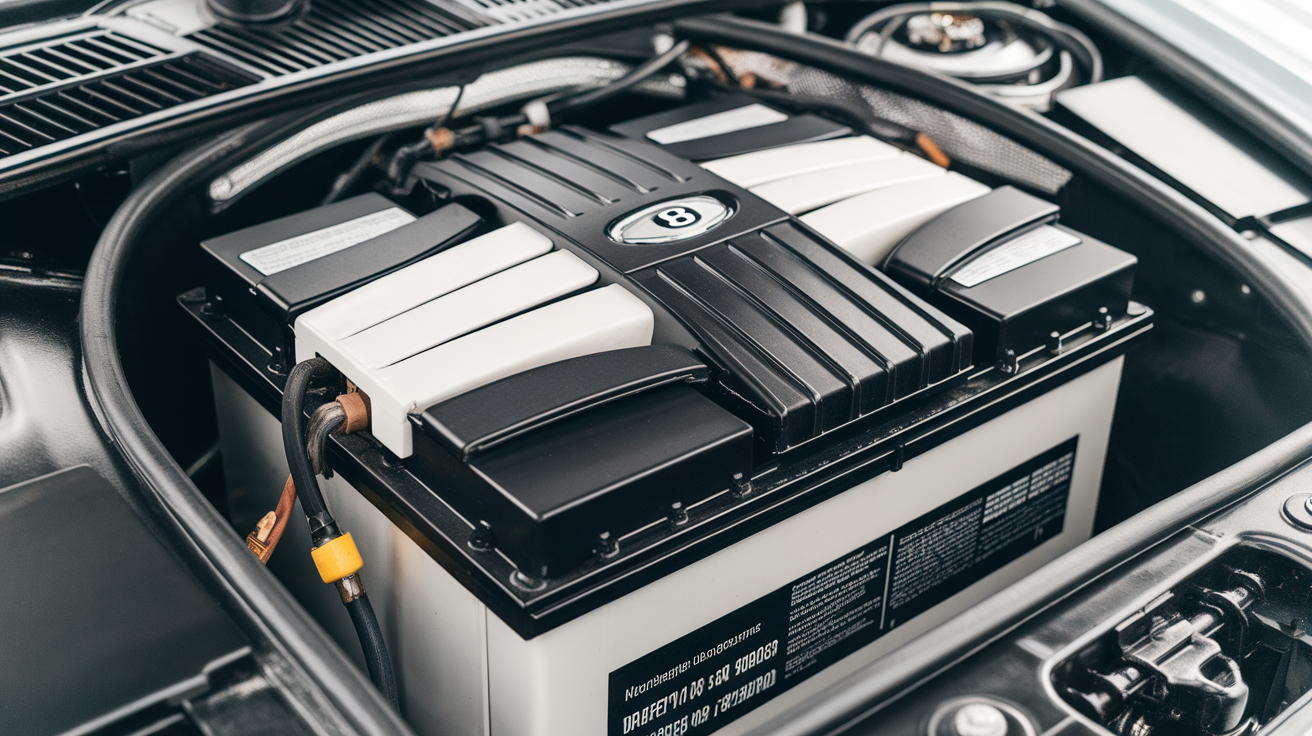
Extreme heat poses a significant challenge to Bentley Battery Management Systems, especially in regions like Dubai, where ambient temperatures regularly exceed safe thresholds for lithium-ion performance. Heat stress can accelerate cell degradation, reduce charge efficiency, and trigger protective shutdowns if not properly managed. To counter this, Bentley integrates AC-assisted battery cooling directly into the BMS architecture, allowing real-time temperature control and dynamic cooling adjustments based on driving load and external conditions.
The Dubai climate demands more frequent service intervals to inspect coolant levels, thermal sensors, and software calibration. Bentley owners in hot zones are advised to schedule battery system diagnostics every 6–8 months to ensure optimal energy recovery and prevent thermal fatigue. The BMS also plays a critical role in balancing heat across modules, using predictive algorithms to reroute energy flow and avoid localized overheating. In essence, Bentley Battery Management Systems are not just passive monitors—they’re active climate defense mechanisms engineered for resilience in extreme environments.
Bentley Battery Management Systems and Vehicle Performance
Bentley Battery Management Systems play a pivotal role in shaping vehicle dynamics, especially in hybrid and EV configurations. By actively managing battery load balancing, the BMS ensures consistent power output across all driving conditions, preventing voltage drops that could compromise acceleration. During rapid throttle input, the system coordinates with the ECU and drivetrain systems to deliver seamless torque delivery, optimizing energy draw from the battery without stressing individual cells.
This coordination is essential for performance tuning, where the BMS adjusts output curves based on driving mode, ambient temperature, and battery health. In high-performance Bentley EVs, the BMS also fine-tunes battery optimization algorithms to maintain peak output during sustained acceleration. The result is not just raw power, but refined, intelligent propulsion that responds precisely to driver input. In essence, Bentley Battery Management Systems are the silent engineers behind every surge of speed, ensuring that performance is both thrilling and sustainable. For the mechanical side of throttle feel and soundtrack tuning, explore Bentley Exhaust Valve Systems.
Why Choose a Bentley Repair Specialist for Bentley Battery Management Systems?
When it comes to servicing Bentley Battery Management Systems, choosing a Mercedes repair specialist may seem unconventional, but it’s a strategic advantage. These workshops often employ certified technicians with deep cross-brand expertise in high-voltage systems, especially in luxury car servicing. Mercedes EV platforms like the EQS and EQE share architectural similarities with Bentley’s hybrid and electric models, making these specialists uniquely equipped to handle battery diagnostics, load balancing, and ECU coordination.
Access to OEM-grade tools and software is another key differentiator. Mercedes-certified workshops use advanced diagnostic platforms capable of interfacing with Bentley’s BMS protocols, ensuring accurate fault detection and safe recalibration. Technicians trained on Mercedes systems are already familiar with battery optimization, thermal management, and regenerative braking logic, which directly translates to Bentley’s BMS architecture.
Case studies from Dubai-based workshops show successful Bentley battery servicing performed by Mercedes-trained teams, especially in scenarios involving AC-integrated cooling, cell replacement, and performance tuning. In short, a Bentley workshop isn’t just a fallback; it’s a high-performance ally for maintaining the integrity and longevity of Bentley Battery Management Systems.
Service Recommendations and Maintenance Schedule
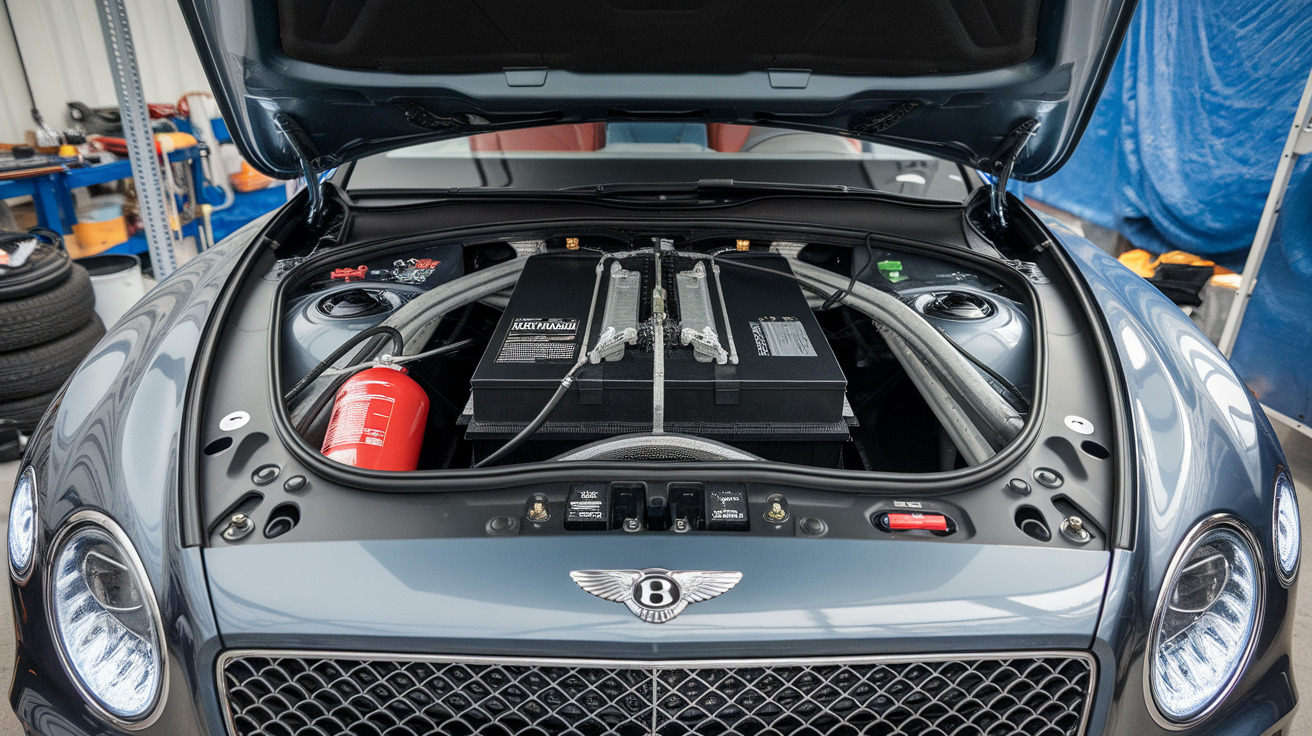
Maintaining Bentley Battery Management Systems in peak condition requires a proactive approach. Regular battery checkups, preventive maintenance, and performance diagnostics are essential, especially in hot climates like Dubai, where thermal stress can accelerate wear. Below is a recommended schedule tailored for hybrid and EV Bentleys:
| Service Task | Interval | Purpose |
| Battery Inspection & Diagnostics | Every 6 months | Detect cell imbalance, voltage drops, and thermal anomalies |
| Cooling System Check | Every 6–8 months | Ensure AC-integrated cooling is functioning under Dubai heat stress |
| Software & ECU Updates | Annually | Maintain coordination between BMS, ECU, and drivetrain systems |
| Battery Load Balancing Calibration | Every 10,000 km | Optimize torque delivery and energy recovery |
| Performance Check & Regenerative Logic | Every 12 months | Validate energy recovery systems and braking integration |
| Workshop Visit for Full BMS Service | Every 12–18 months | Comprehensive BMS health check, firmware updates, and preventive tuning |
For bookings, OEM-spec diagnostics, and model-specific BMS calibration, head to our independent Bentley repair garage and schedule your visit.
Schedule Your Bentley Battery System Inspection
Protect your investment with a skilled Bentley Battery Management Systems inspection. Booking a diagnostic session ensures early detection of issues like voltage imbalance, thermal stress, or regenerative braking faults, before they impact performance. A quick battery check can lead to a detailed battery health report, giving you peace of mind and long-term reliability.
Benefits of Early Detection
- Prevent costly repairs
- Optimize battery lifespan
- Maintain peak torque and energy recovery


Leave a Comment